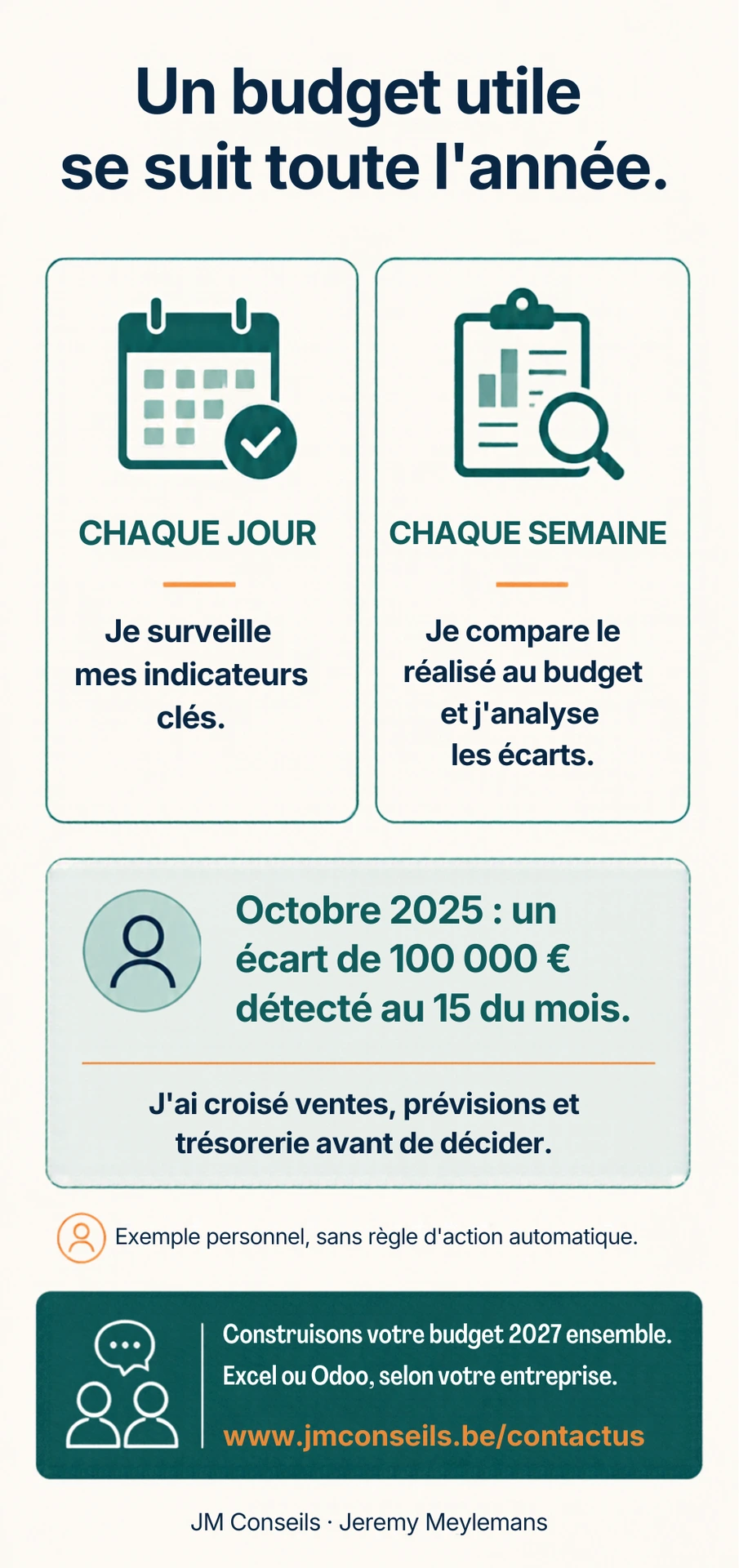
On October 15, 2025, I identified a €100,000 gap between our revenue and the target in our budget.
In our catering business, sales are booked in advance. We knew we could no longer make up that shortfall before the end of the month.
I then reviewed the forecasts for the following months and our cash movements. My projections showed that, without action, we would have exhausted our available cash within three months.
I had to make a difficult staffing decision. That action helped bring the budget back into balance the following month.
That experience sums up why I use an annual budget: to anticipate difficulties and make decisions based on concrete information.
As 2027 approaches, this is how I build this management tool.
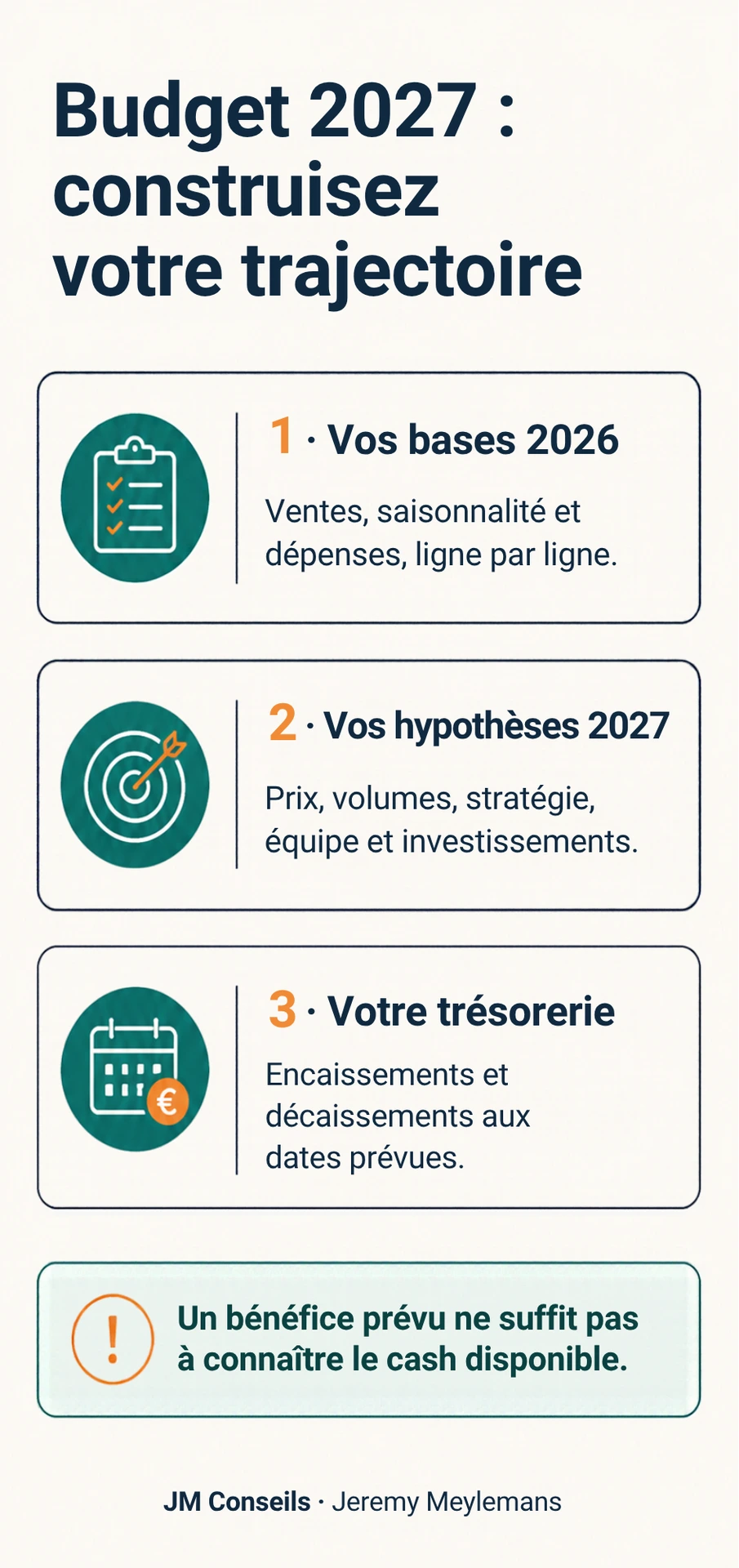
1. Start with the reality of your business
I start with the current year’s figures: revenue, purchases, staffing costs, taxes and other expenses. If the year is not yet over, I supplement the available results with estimates for the remaining months.
I review each expense individually. Some vary with sales; others remain even when business slows down.
This analysis helps establish what the business actually needs to fund.
2. Build month-by-month forecasts
To forecast sales, I start with the previous year’s trends and seasonality.
I then adjust the assumptions to reflect changes in prices, the sales strategy, the advertising budget and the outlook for the sector. A price-driven increase does not necessarily mean we will sell more: the assumptions need to be explicit.
The budget must also account for the resources required: people, purchases, investment and financing.
An annual target needs to translate into twelve months that reflect the rhythm of the business.
3. Check when cash will be available
I then connect these forecasts to the expected dates of receipts and payments.
When will customers pay? When will suppliers, wages, taxes and investments need to be paid?
A cash flow forecast tracks these inflows and outflows month by month. Forecast profit alone does not tell you how much cash will be available.

4. Stress-test the budget
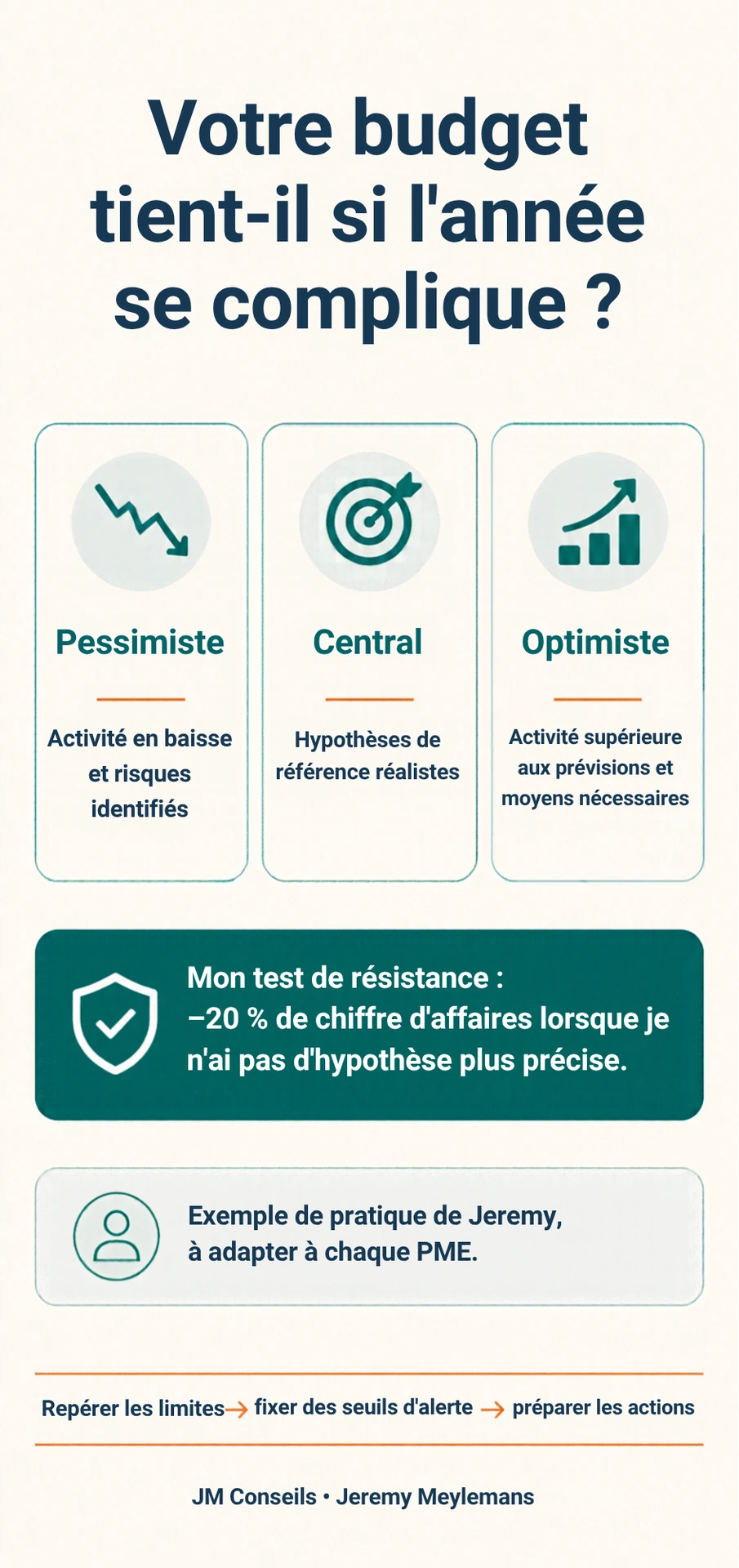
I prepare three scenarios: pessimistic, base case and optimistic.
When I do not have more specific information about the risks, one of my tests is a 20% fall in revenue. This is a stress-test assumption from my own practice, to be adapted to each business.
I want to understand how far the plan can withstand pressure, when the business would start making a loss and when cash would become tight.
In the food sector, I also test variations in the ratio between sales and ingredient costs. For example, a ratio of 3.5 means €3.50 in revenue for every €1 spent on ingredients, measured on a consistent basis.
Comparing several levels helps identify the limits of the business model. This ratio alone does not measure profitability: the other expenses still need to be covered.

5. Set warning thresholds and monitor variances
Once I have identified those limits, I set warning thresholds and consider what actions to take if they are crossed.
If the sales-to-ingredient-cost ratio deteriorates, I look in particular at purchasing, purchase prices, waste and sales.
Personally, I check my key indicators every day and review the budget every week. I keep the original target as a reference and update the forecasts to understand where we are heading.
A budget delivers its value through this regular follow-up.

Let’s build your 2027 budget together
With JM Conseils, I help you build an annual budget based on your figures, your goals and the risks in your sector.
Together, we work through monthly forecasts, expenses, cash flow, scenarios and the indicators to monitor.
You receive a tool in Excel or Odoo, depending on how your business operates. In Odoo, monitoring depends on the data available and kept up to date in your system. Support after delivery is tailored to your needs.
My experience comes from the food and catering sector; I adapt this approach to the realities of other small and medium-sized businesses.
Get in touch to prepare your 2027 budget.